Vetting Under Pressure: Navigating the Heatwave Panic Loop
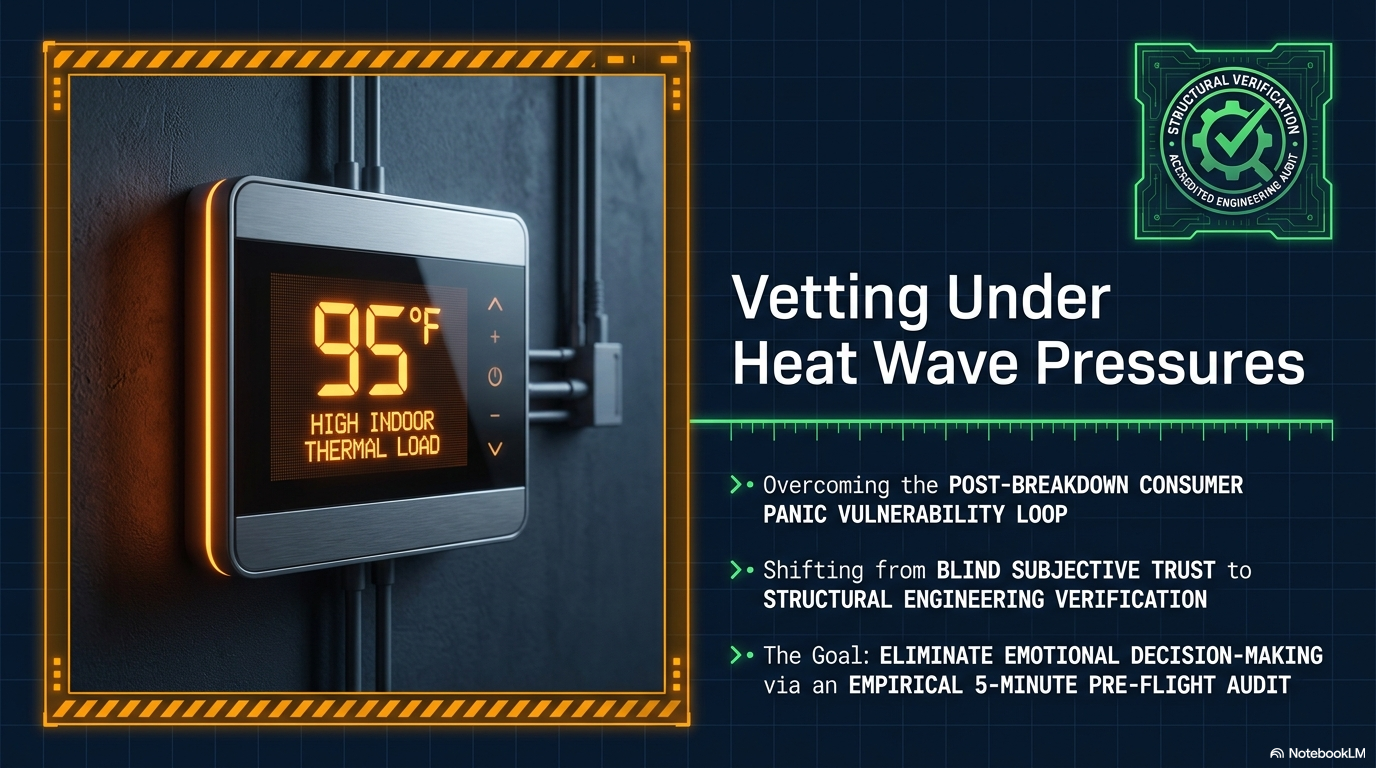
When outdoor temperatures exceed 95°F in Central Texas, an air conditioning failure is not just an inconvenience—it is a domestic emergency. Homeowners in neighborhoods near the Dell Diamond stadium often find themselves trapped in a "panic loop." Under intense heat stress, the priority shifts from vetting a contractor for quality to hiring the first available technician who can arrive today.
Predatory sales organizations exploit this panic. Commission-driven sales technicians may misdiagnose a simple, easily repairable electrical failure—such as a blown dual-run capacitor or a dirty contactor—as a catastrophic compressor failure. They use high-pressure scare tactics, claiming that the system is obsolete, dangerous, or not worth repairing, in order to push a full system replacement on a day when the homeowner's resistance is at its lowest. Vetting a local Round Rock AC company with a cool head, even during a heatwave, is the only defense against these high-pressure upgrade loops.
Texas Legal Mandates: Contractor Licensing vs. Tech Registration
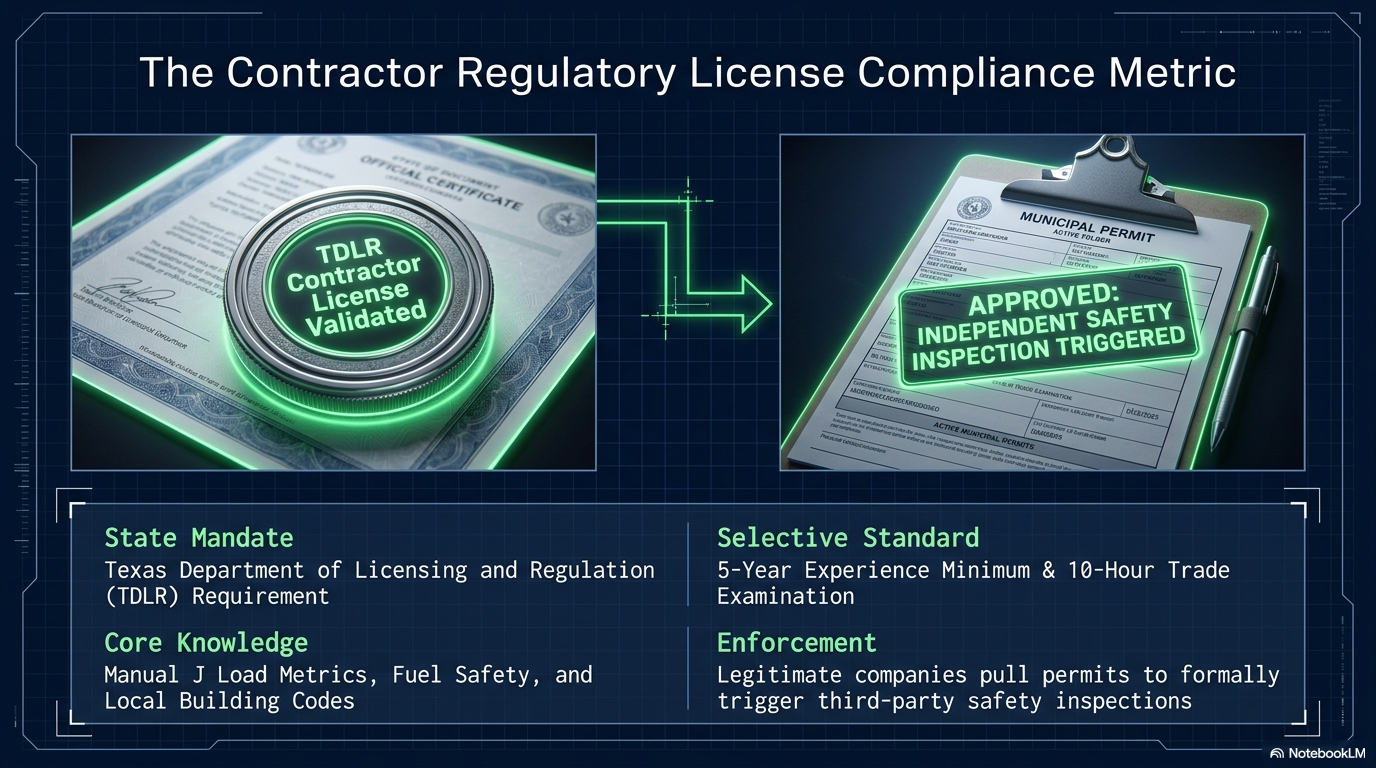
In the state of Texas, residential air conditioning work is regulated to protect consumer safety. Under the rules of the state licensing board, any business offering HVAC services must operate under a licensed Air Conditioning and Refrigeration Contractor. A licensed contractor must carry commercial general liability insurance, pass a rigorous state-administered exam, and prove years of active field experience. To protect yourself, always verify a contractor's status through the online TDLR License Verification Database before scheduling service.
Homeowners must verify two key compliance items before any work begins:
- Contractor Licensing vs. Tech Registration: Individual technicians working in your home are registered or certified, but they must be under the direct oversight of a fully licensed contractor. Always ask to see the contractor's license number (which should be displayed on their service vehicles and all printed bids).
- Local Building Permits: For major component replacements, such as installing a new outdoor condenser or an indoor evaporator coil, the company is legally required to pull a building permit. This permit triggers a third-party safety inspection by the municipal code inspector to ensure the work is compliant. Contractors who refuse to pull permits or ask the homeowner to do so are bypassing state safety codes.
The Hidden Labor Threat: W-2 Staffing vs. Piece-Rate Subcontracting
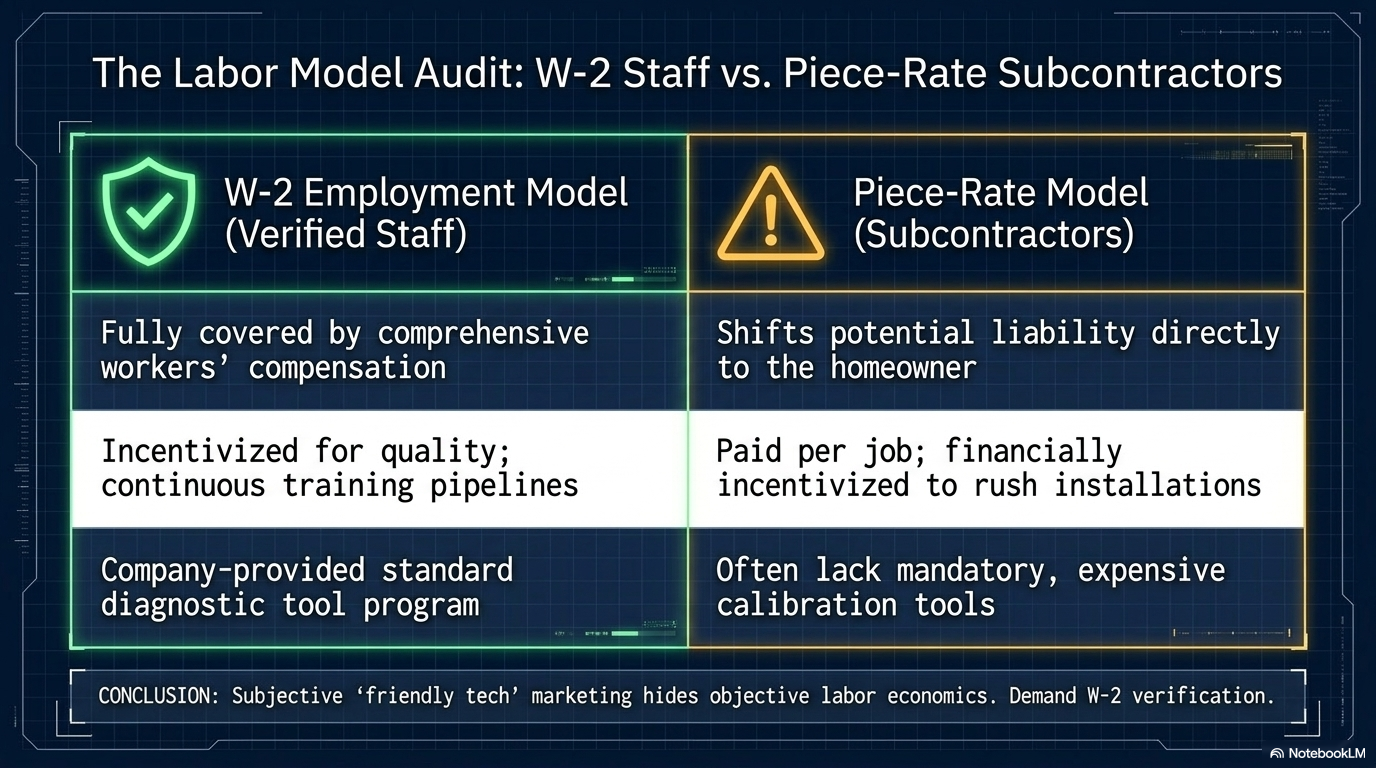
A major threat in the HVAC industry is the labor delivery model. Many high-volume marketing companies do not employ W-2 technicians. Instead, they rely on 1099 independent subcontractors paid on a "piece-rate" model (earning a flat commission per job completed or equipment installed).
This labor structure introduces a severe conflict of interest. Because the installer's pay is tied solely to how fast they complete the job, they are heavily incentivized to cut corners on physical installation standards. Rushing through critical processes—such as bypassing a nitrogen line purge during brazing or failing to pull a proper vacuum—saves them hours of labor but causes premature system failure. Furthermore, if an uninsured subcontractor is injured on your property, the homeowner can be held liable. Restricting your search to companies employing dedicated, hourly-paid W-2 staff ensures that safety and quality are prioritized over speed.
Engineering Benchmarks: The Sealed System Commissioning Audit
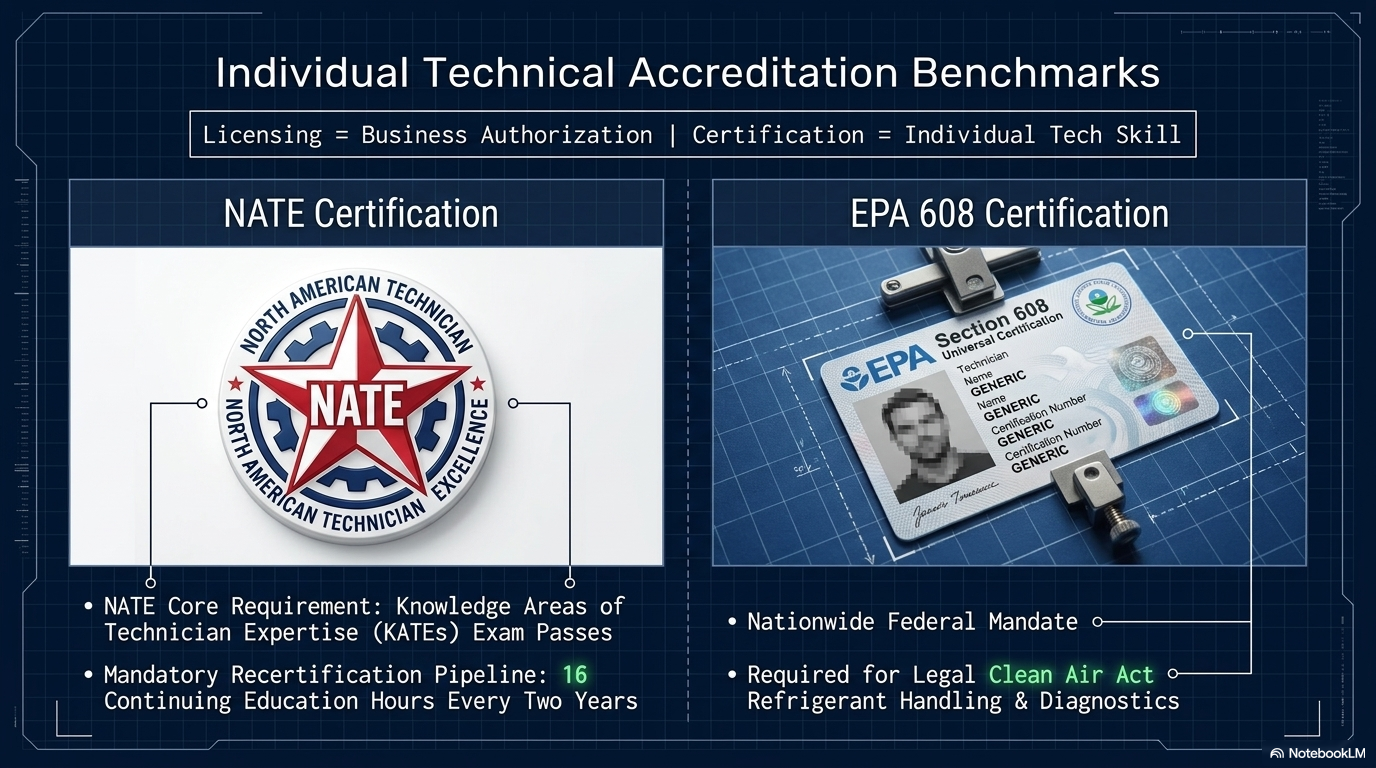
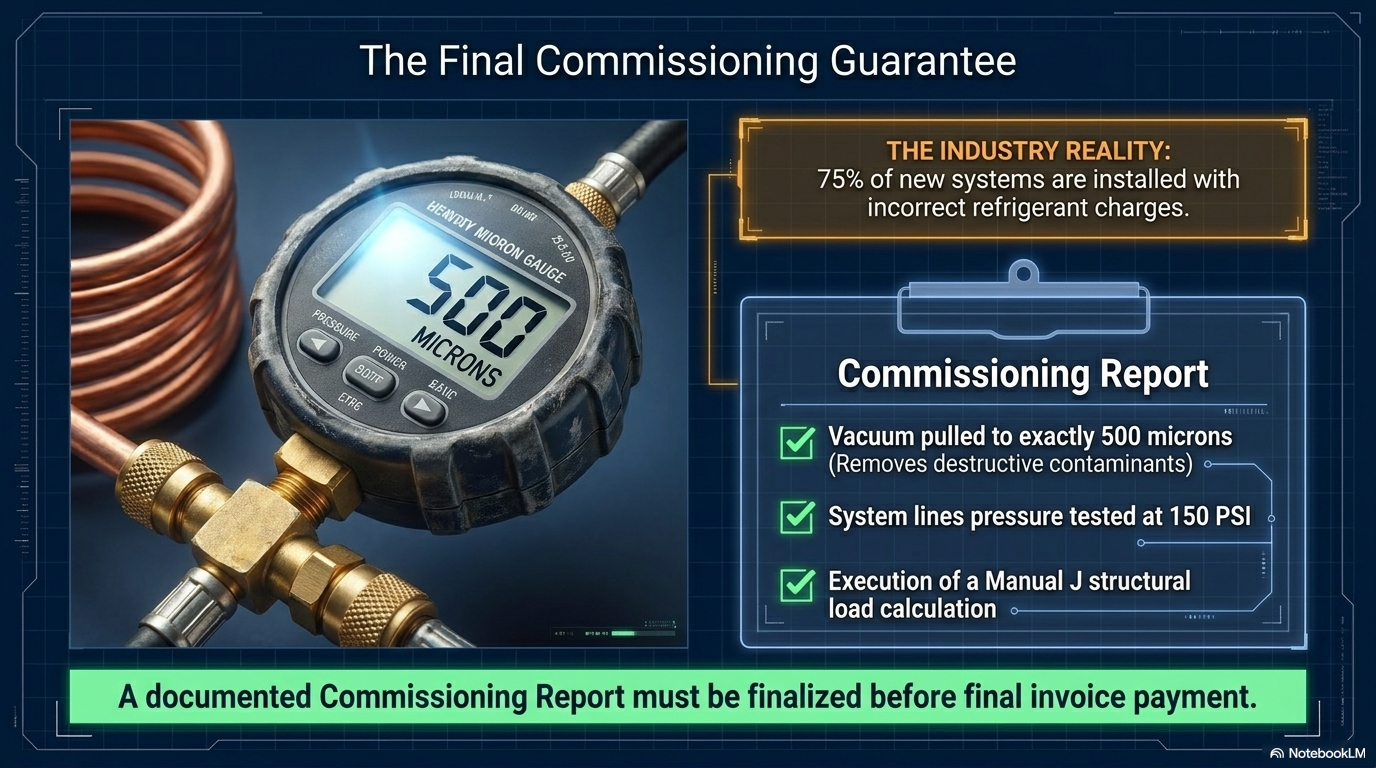
When hiring a contractor for an emergency AC repair service or a full replacement, you should hold them to concrete engineering standards. A professional technician must execute a formal Sealed System Commissioning Audit rather than relying on guesswork. Handling chemical refrigerants safely also requires a federal EPA Section 608 certification. The audit comprises three strict phases:
- Dry Nitrogen Pressure Test: After brazing copper lines, the technician must pressurize the system with dry nitrogen to a maximum of 150 PSI. Using high-pressure nitrogen is the only safe way to identify micro-leaks before charging the system with expensive chemical refrigerants.
- Deep Vacuum Evacuation: The system must be evacuated using a vacuum pump to below 500 microns. This vacuum depth must be verified on a dedicated digital micron gauge (not an analog manifold gauge set). Pulling a deep vacuum removes moisture and non-condensable gases, preventing acid formation within the compressor.
- Delta T Temperature Split Check: Once the system is running under steady-state conditions, the temperature difference between the return air and supply air must measure between 15°F and 20°F. This split confirms the system is pulling BTUs out of the air at its engineered capacity.
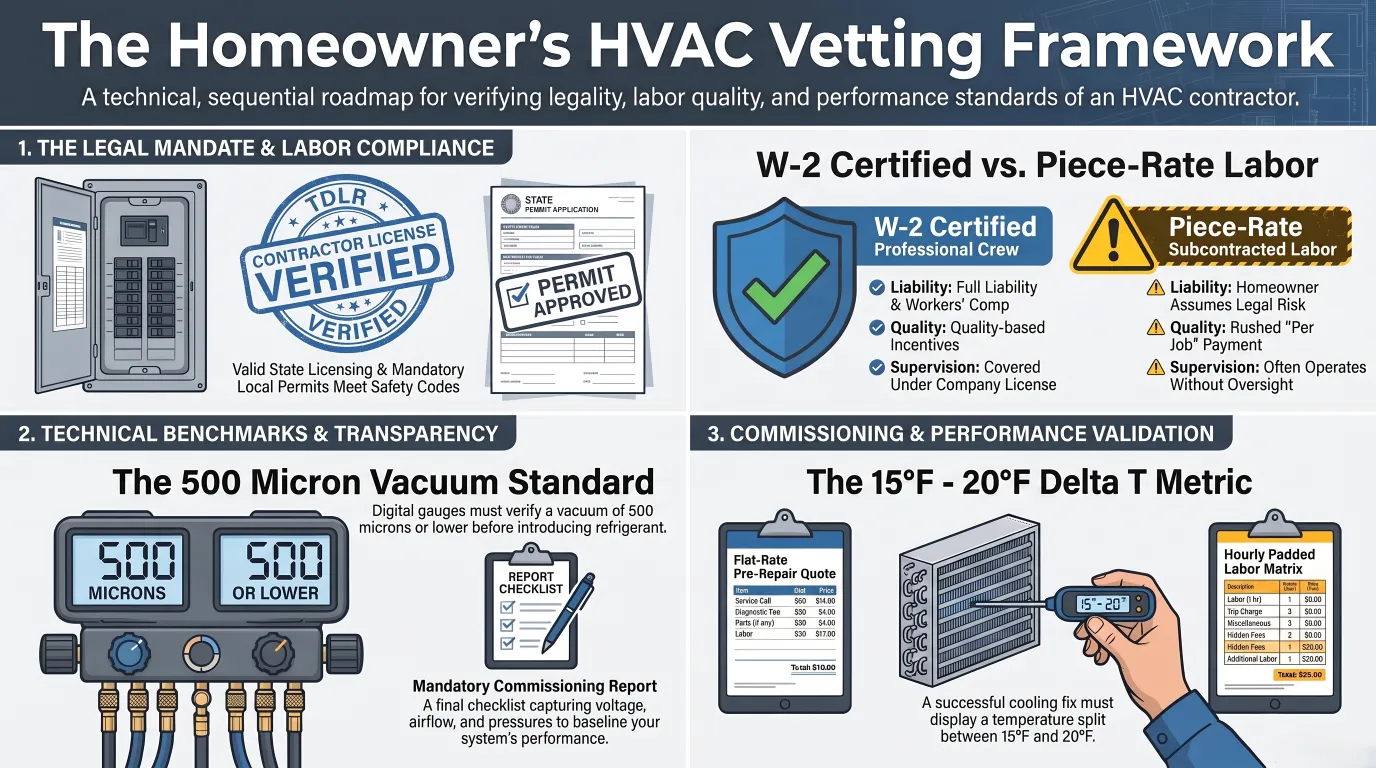
Whether you require standard central air maintenance or specialized mini-split repairs, requiring the technician to document these commissioning numbers on your final invoice protects you against incomplete, rushed installations.
Pricing Models: Flat-Rate vs. Hourly Labor Matrix
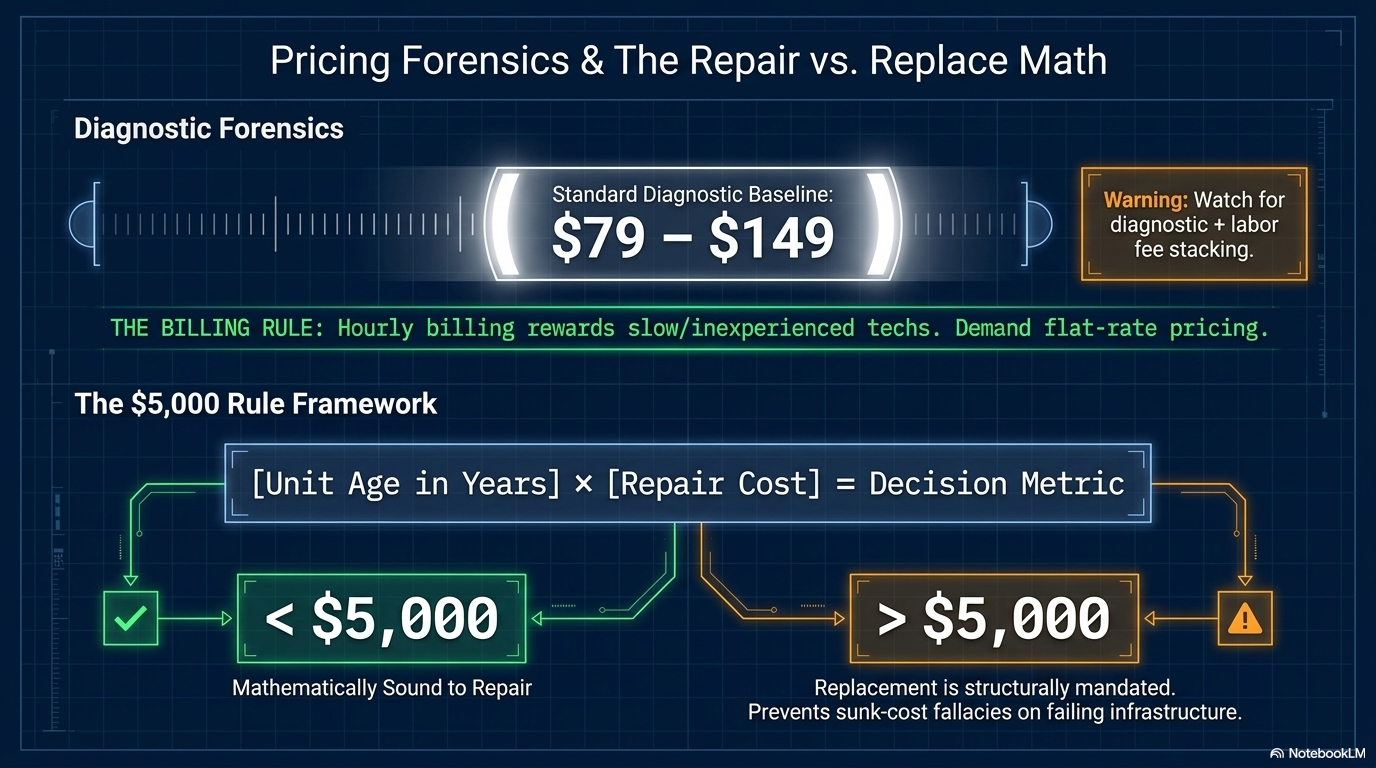
Transparent pricing is the hallmark of an ethical HVAC service. Homeowners should understand how their bid is constructed and watch out for diagnostic fee stacking, where companies stack multiple diagnostic charges for looking at different parts of the same system.
| Pricing Parameter | Upfront Flat-Rate Pricing Model (Legitimate) | Hourly Padded Labor Matrix (High Risk) |
|---|---|---|
| Diagnostic Transparency | Clear, single upfront diagnostic fee that covers finding the root cause of the breakdown. | Stacked diagnostic fees (charging separate fees to check the capacitor, contactor, and compressor). |
| Labor Calculation | Quoted directly from a standardized national pricing guide before repairs begin. You pay the agreed price regardless of how long the repair takes. | Open-ended hourly rates that allow the technician to pad hours, charging more if they work slowly or struggle with diagnostics. |
| Itemization | Fully itemized parts and labor breakdowns showing exactly what you are paying for. | Bundled "lump-sum" bids that hide excessive markups on basic parts. |
| Warranty Security | Standard 1-year parts and labor warranties backed by written company policies. | Vague verbal warranties that are difficult to enforce when issues recur. |
If you are evaluating service providers or need an inspection near the historical Chisholm Trail Crossing Park landmark, contact our team today. We provide upfront pricing, licensed contractor oversight, and fully documented commissioning audits on every service call.
Disclaimer: The technical vetting metrics, licensing guidelines, and engineering benchmarks provided on this page are for informational and educational purposes only. Always verify state licensing credentials directly before hiring a contractor.